
 Facebook
 X
X
 Pinterest
 Copy Link
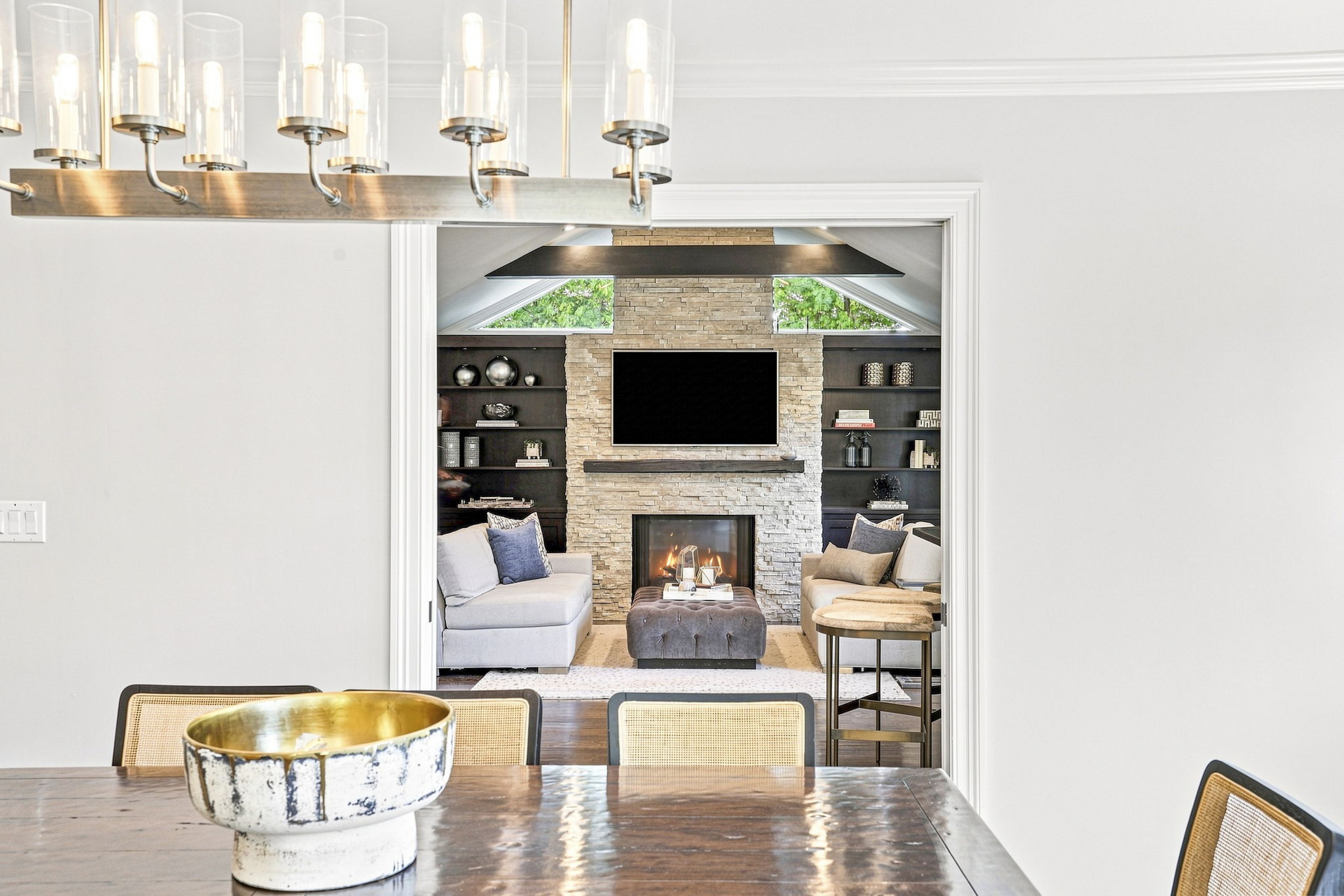
Buying Luxury Real Estate in Westchester and Fairfield County: 5 Questions Buyers Should Ask
Is now a good time to buy a luxury home in Westchester County or Fairfield County? What makes a luxury property difficult to finance? How much does privacy affect value?
These are questions I hear frequently from buyers considering a high-end home in Westchester County, New York, or Fairfield County, Connecticut.
Luxury real estate is different from the conventional housing market. At higher price points, buyers are not simply purchasing square footage. They are purchasing location, privacy, architecture, land, lifestyle, convenience, quality and, in many cases, long-term value.
Whether you’re considering a primary residence in Scarsdale, Rye, Purchase, Harrison, Greenwich, Darien or New Canaan, a private estate in Pound Ridge or North Stamford, or a second home in the Hudson Valley or Connecticut, understanding the nuances of the luxury market is important.
As a Seniors Real Estate Specialist® (SRES®), I also look at these decisions through a longer-term lens. For many affluent buyers, the question isn’t only “Is this the right house today?” It is also “Will this home still work for me five, ten or fifteen years from now?”
Here are five questions luxury buyers should consider.
1. Is Now a Good Time to Buy in This Market?
The short answer is: it can be, depending on the property and your timeframe.
There is no single “Westchester real estate market” or “Fairfield County real estate market.” Conditions can vary dramatically from town to town, neighborhood to neighborhood and even from one property to another.
In Westchester County, home values have continued to rise in 2026. Recent market data shows the county median sale price approaching $1 million, with homes continuing to move relatively quickly and many properties selling above asking price.
Fairfield County tells a similar story at the upper end. Greenwich, Old Greenwich, Darien and New Canaan continue to attract buyers who are willing to pay a premium for exceptional homes, proximity to the coast, train access, privacy, land and lifestyle. In the second quarter of 2026, for example, Old Greenwich averaged more than $1,000 per square foot, while Greenwich averaged approximately $891 per square foot.
At the same time, mortgage rates remain elevated, with the national 30-year fixed mortgage rate recently around the mid-6% range. That has caused some buyers to pause.
For a financially well-qualified luxury buyer, however, today’s market can present opportunities that are less obvious than they were several years ago.
My advice: Don’t try to perfectly time the market. Instead, focus on finding the right property at the right price.
A truly exceptional property in Rye, Scarsdale, Greenwich, Darien or New Canaan may not come on the market again for years. If a home checks the boxes for location, architecture, land, privacy and lifestyle, waiting for mortgage rates to change could mean losing the property entirely.
And remember: you can refinance a mortgage. You cannot refinance a location.
2. What Makes a Luxury Property Difficult to Finance?
Luxury homes are not necessarily difficult to finance, but the financing process can become more complicated as the purchase price increases.
For 2026, the baseline conforming loan limit for a one-unit property is $832,750, although higher limits apply in designated high-cost areas, including portions of New York and Connecticut.
Once you’re financing significantly above conventional loan limits, you’re typically entering jumbo mortgage territory.
This can mean:
- More extensive financial documentation
- Higher reserve requirements
- Greater scrutiny of income and assets
- More complicated underwriting for self-employed buyers
- Additional review of investment accounts and other assets
- Different requirements for second homes
- More scrutiny of the property itself
Luxury buyers may also have financial profiles that don’t fit neatly into traditional underwriting.
For example, an executive may receive substantial compensation through bonuses, restricted stock or equity. A business owner may have significant assets but a complicated income history. An international buyer may have assets and income outside the United States.
This is why I recommend connecting with an experienced jumbo mortgage lender early in the process, before beginning a serious luxury-home search.
For affluent buyers, the goal isn’t simply to determine “How much can I borrow?”
It’s to determine how you want to structure the purchase.
A buyer with substantial liquid assets may choose to finance part of the purchase even when they could pay cash. Another buyer may prefer to preserve liquidity for investments, business opportunities or other real estate.
The right financing strategy should be part of the purchase strategy—not something addressed after you’ve found the house.
3. How Much Does Privacy Affect the Value of a Luxury Home?
A tremendous amount.
Privacy is one of the most difficult luxury amenities to create—and one of the easiest to lose.
In higher-end real estate, buyers often place a premium on:
- Large acreage
- Long private driveways
- Mature landscaping
- Natural buffers
- Gated entrances
- Waterfront privacy
- Limited visibility from neighboring homes
- Quiet surroundings
- Private outdoor entertaining areas
This is particularly important in markets such as Greenwich, New Canaan, Darien, Pound Ridge, Purchase, Bedford, Rye and Scarsdale, where buyers may be willing to pay substantially more for a property that feels secluded while still offering convenient access to Manhattan, major highways, schools, shopping and transportation.
Privacy is also highly personal.
A buyer who values entertaining may want a spectacular outdoor setting with privacy from neighboring properties. Another buyer may prioritize complete seclusion. A family may want acreage and room for a pool, tennis court or guest house.
And there is an important distinction:
A large property is not necessarily a private property.
A 5-acre home with neighboring houses clearly visible from every window may feel less private than a 2-acre property surrounded by mature trees and thoughtfully designed landscaping.
When evaluating luxury real estate, I encourage buyers to look beyond the house itself.
Look at what you can see, hear and experience from the property.
That is part of the value.
4. Which Renovations Actually Matter to Luxury Buyers?
Luxury buyers don’t necessarily want the biggest house or the most expensive renovation.
They want quality.
At the higher end of the market, certain improvements tend to matter more than others.
Renovations that can make a meaningful difference include:
A high-quality kitchen
Luxury buyers often expect professional-grade appliances, custom or semi-custom cabinetry, substantial countertops, excellent lighting and a well-designed layout.
Updated bathrooms
Spa-like primary bathrooms, high-quality fixtures, heated floors and thoughtful storage can make a strong impression.
Outdoor living
Pools, terraces, patios, outdoor kitchens, fireplaces and beautifully designed landscaping can significantly enhance the lifestyle value of a property.
Energy efficiency and mechanical systems
Modern heating and cooling systems, updated electrical, backup generators, energy-efficient windows and well-maintained roofs may not be as glamorous as a new kitchen—but they can be extremely important to today’s buyers.
Smart-home technology
Whole-home audio, integrated lighting, security systems, automated shades, climate control and sophisticated home networks can appeal to luxury buyers.
Flexible living space
This is an area I pay particular attention to as an SRES®.
A beautiful home should also be able to adapt.
A first-floor bedroom, elevator-ready design, accessible bathroom, home office, guest suite or easily navigable floor plan can become increasingly valuable as homeowners age.
For affluent buyers planning to remain in a home for many years, universal design and aging-in-place features can be a luxury, not a limitation.
The best renovations are those that improve both lifestyle today and flexibility tomorrow.
5. What Should I Know Before Buying a Second Home?
Buying a second home is very different from buying a primary residence.
The first question should not be:
“Can I afford it?”
It should be:
“How will I actually use it?”
Will it be a weekend home? A summer residence? A place for family gatherings? A future retirement property? An investment? Or eventually a primary residence?
Those answers can dramatically change what makes sense.
For example, a buyer living in Scarsdale, Rye or Greenwich may want a weekend property within an easy driving distance rather than something requiring a flight.
And for someone thinking about retirement or eventually leaving a larger primary residence, a second home can become part of a long-term lifestyle and real estate strategy.
Before purchasing, consider:
- Property taxes
- Insurance costs
- Maintenance and landscaping
- Heating and cooling expenses
- Snow removal
- Pool maintenance
- Security
- Property management
- Travel time
- Local zoning restrictions
- Rental restrictions, if applicable
- Financing requirements
- Future resale appeal
I also recommend thinking carefully about the property’s “10-year test.”
If you eventually decide you want to spend more time there, or move there permanently, will the property still work?
This is particularly important for buyers who are approaching retirement or helping an older parent transition from one home to another.
A beautiful second home that becomes physically difficult to navigate, expensive to maintain or inconvenient to reach may not be the lifestyle investment you originally envisioned.
What Should International Buyers Expect When Purchasing Luxury Real Estate?
International buyers are an important part of the luxury real estate market, particularly in communities with strong connections to New York City, finance, technology, education and international business.
Westchester and Fairfield County can be particularly attractive because they offer a combination of proximity to Manhattan, highly regarded communities, privacy, larger properties and an exceptional suburban lifestyle.
But international buyers should expect the purchasing process to be different from buying property in their home country.
Before beginning the search, I recommend assembling a team that understands international transactions, including:
- A real estate professional experienced with international buyers
- A U.S. lender familiar with foreign nationals, if financing is needed
- A real estate attorney
- A tax professional
- Potentially an estate-planning attorney
- An insurance professional
Buyers should also understand the implications of currency exchange, U.S. tax obligations, ownership structures, estate planning and future resale.
One important consideration is FIRPTA, the Foreign Investment in Real Property Tax Act. FIRPTA can require withholding when a foreign person sells U.S. real property, so international buyers should understand the implications before purchasing. Not only when they eventually sell.
The structure of ownership can also matter significantly for high-net-worth international buyers.
This is an area where your real estate professional should coordinate closely with qualified legal and tax advisors rather than attempting to provide tax or legal advice.
Luxury Real Estate Is About More Than the House
The most important thing I tell luxury buyers is that the most expensive house isn’t necessarily the best investment or the best lifestyle choice.
A $3 million home in one community may offer a completely different value proposition than a $3 million home somewhere else.
The same is true at $5 million, $10 million or beyond.
At this level, buyers are evaluating much more than bedrooms and bathrooms.
They’re considering:
Location. Privacy. Land. Architecture. Lifestyle. Schools. Transportation. Taxes. Maintenance. Resale potential. Future flexibility.
And for many buyers, there is another question that deserves attention:
“Will this home work for the next chapter of my life?”
That question is particularly important for older adults, empty nesters and families helping parents make a move.
A luxury home should not only be beautiful today. It should support the lifestyle you want tomorrow.
Whether you’re considering a luxury home in Scarsdale, Rye, Purchase, Harrison, Greenwich, Old Greenwich, Darien, New Canaan, Westport or another premier Westchester or Fairfield County community, having an experienced real estate advisor who understands both the market and the bigger picture can make a significant difference.
The right home isn’t simply the one you can afford. It’s the one that makes sense for your life, your goals and your future.
Thinking About Buying Luxury Real Estate in Westchester or Fairfield County?
If you’re considering a primary residence, second home, downsizing move, multigenerational purchase or future retirement property, I can help you evaluate not just the home, but the long-term lifestyle and real estate strategy behind the purchase.
Jennifer Martire Baukol, MBA, SRES®
Coldwell Banker Realty | Global Luxury
Westchester County, NY & Fairfield County, CT
Jennifer.Baukol@cbrealty.com
(914) 584-2211 Cell
Real estate decisions should be made in consultation with qualified legal, tax, financial and lending professionals where appropriate. Market conditions and financing requirements can change.
“Westchester County luxury real estate,” “Fairfield County luxury real estate,” “luxury homes in Greenwich,” “luxury homes in Scarsdale,” “luxury real estate in Rye,” “New Canaan real estate,” “Darien luxury homes,” “buying a second home,” “jumbo mortgage,” “international buyers” and “Senior Real Estate Specialist”